Scan to Donate
Tax-deductible donations help fund the Common Myna Program and protect local biodiversity.
Coffs Harbour Regional Landcare’s Common Myna Program is funded through the City of Coffs Harbour Environmental Levy and the generous support of private donors. The Common Myna (Acridotheres tristis), previously known as the Indian Myna, was introduced to Australia from south-east Asia around 150 years ago and has become a significant threat to native wildlife. These highly adaptable birds thrive in urban and suburban environments, where they compete aggressively with native species for food, nesting hollows and territory. They can evict native birds from nesting sites, sometimes killing chicks of hollow-nesting species such as the Eastern Rosella, and can also create nuisance and health issues by nesting in roof cavities and spreading mites and disease.
Through humane trapping, volunteer action and community participation, this program helps protect local biodiversity and restore habitat for native birds. As demand for the program continues to grow, tax-deductible donations play a vital role in supporting equipment, volunteer training and on-the-ground conservation efforts that benefit our region’s unique wildlife. Please consider donating today.
Managing the number of Common Mynas by trapping
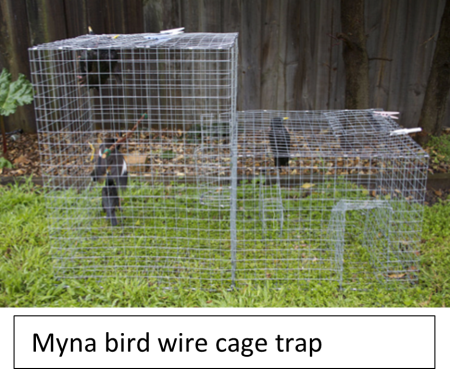
Coffs Harbour Regional Landcare have volunteer trappers who place special traps around homes and farms to trap Common Mynas and remove them humanely. These traps use dry pet food to attract the Mynas. Traps are usually left in place for 1 to 2 weeks before they are moved to a different site. Trapped birds are removed periodically by volunteer trappers. The volunteer trapper will assist you through the process. You only need to ensure the attractant food (small pellets of a supplied dried cat food) and water, is available in the cage – to both attract Myna birds and to treat them humanely in the taller roosting cage until your local Myna trapper comes to collect trapped birds. In the very rare event that another bird, like a native Noisy Miner (which is a honeyeater and not fond of cat food), is attracted into the cage your local Myna trapper will come around to free the native bird immediately.
Everyone can help by:
- Ensuring left over pet food is not accessible to the birds, and compost bins are covered;
- Plant more native shrubs and small trees as groundcover refuge and food for native birds, and block holes to roof cavities which may allow the Mynas to roost or nest;
- Host the placement of a trap if there are a lot of Common Mynas coming to your yard.
The Common Myna is frequently confused with the native Noisy Miner
If you can host a trap, it is important to first distinguish the difference bewteen the pest species and the native Myna.
PEST Common (Indian) Myna
|
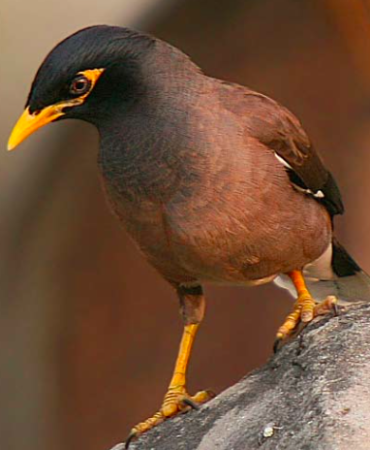
Brown colour Head is all black White patches under wing when flying |
 |
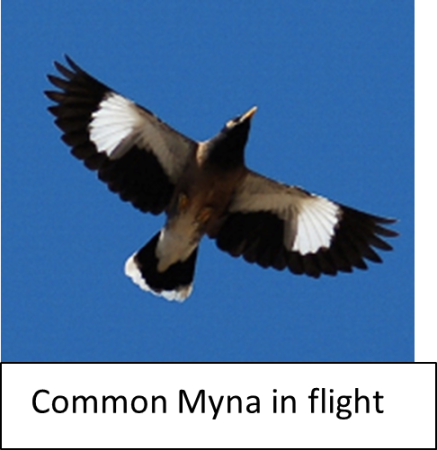 |
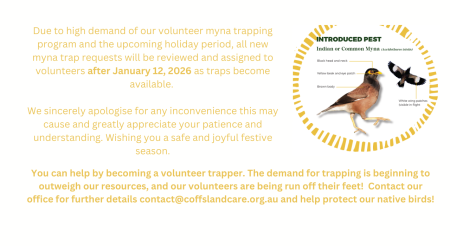
The feral Common Myna has a brown body and black head. In flight it has distinctive white patches under its wings. It is an opportunistic feeder living off insects, compost scraps, pet food and more!
NATIVE Noisy Miner
|
Grey/white on chest, back of head Yellow/olive streak on wing Feeding in flowers |
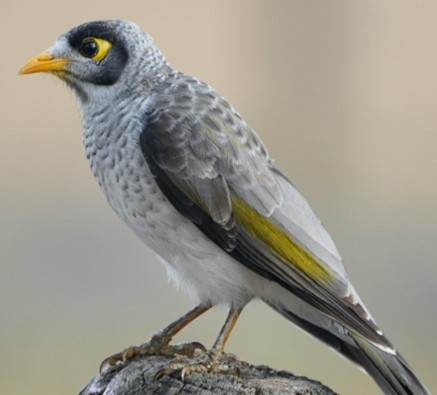 |
The native Noisy Miner (related to the Bell Miner or bellbird) is a member of the honeyeater family and searches for nectar in the flowers. Both birds act communally to drive other birds away, and while the Noisy Miner can be annoying in large numbers it is not a feral pest.
If you’re still unsure, visit the Birdlife Australia Facebook page for a video description on Miner vs Myna
What can you do?
Donate to Support the Common Myna Program

Scan to Donate
Tax-deductible donations help fund the Common Myna Program and protect local biodiversity.
Make a tax-deductible donation and support humane Common Myna control, volunteer-led conservation, and healthier local habitats for local wildlife.
Become a Volunteer Trapper
Our Myna Trapping Program receives minimal annual funding and operates successfully due to the commitment of only a handful of wonderful volunteer trappers and the City of Coffs Harbour Environmental Levy funding.
Full training and support is provided, and fuel costs for trapping travel are subsidised. If you feel you’d like to help with this important program, please send us an email or give us a call at (02) 6651 1308 to discuss further.
Host a Trap (Residents of Coffs Harbour LGA only)
Residents of Bellingen LGA can contact the Dorrigo Indian Myna Control Program Group via Facebook
If you reside within the Coffs Harbour LGA, we are after residents who are willing to host the placement of a small wire cage trap (see photo) on their property to assist us trap these pest birds. The trap needs to be in a quiet place, in a yard away from any dogs. Ideally where Mynas have been observed landing in a yard to search for food. The trap is well proven to be effective in attracting Mynas.
For non-residents of the Coffs Harbour LGA, we are unfortunately unable to provide our volunteer service. We would encourage you instead to:
- Contact your local council and request they establish a program for your LGA
- Consider building or purchasing your own trap (see below for trap plans and accompanying video).
If you are able to host a trap, fill in the form below with your details. One of our volunteer Myna trappers will then be in touch with you when they have a trap available. The Common Myna is frequently confused with the native Noisy Myna. It is important to correctly identify the pest species. Please read the above differences between the species and check on the form below that you have correct identification of the pest species.
Additional Resources: Non-Residents of the Coffs Harbour LGA